

Council Highlights: Youth Employment, Regulating E-Bikes and NYCC Preview
This week at City Council, we considered a wide range of items focused on community safety, housing, affordability, infrastructure, and neighbourhood quality of life. Many of these discussions reflected conversations I have been having directly with residents across Don Valley North about the issues affecting daily life in our communities.
Below is a summary of several items from this week’s Council meeting, along with a preview of next week’s North York Community Council agenda. I hope this update helps provide some context about the decisions being made at City Hall and the work continuing on behalf of residents across our community.

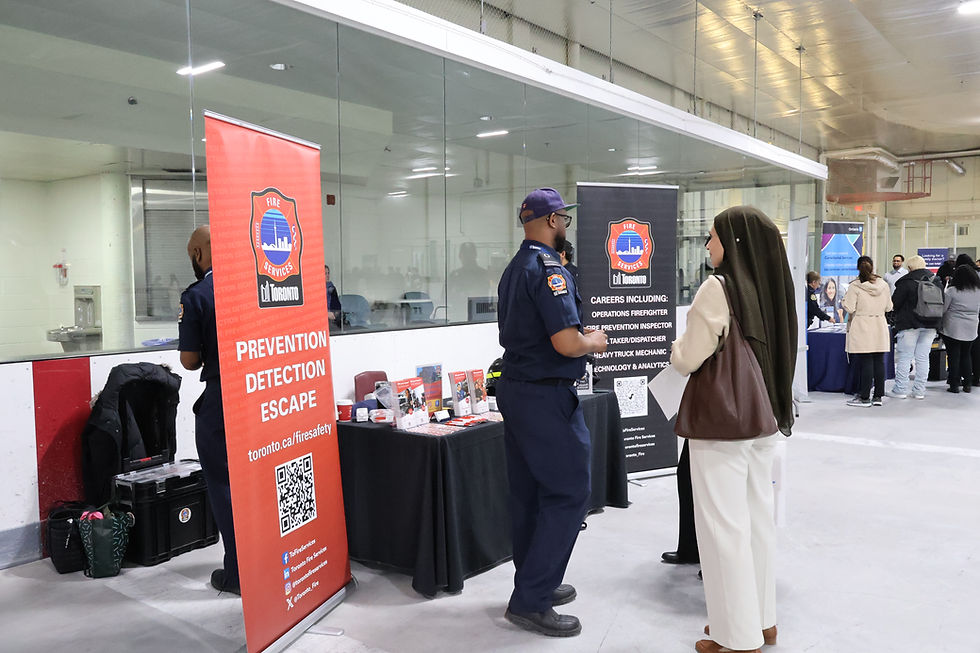
Last week I hosted a youth job fair, where more than 800 young people came out to connect with employers, training opportunities, and community supports. The turnout reflected the strong demand for programs that help young people gain experience, build confidence, and prepare for long-term careers.
So this week, I was glad to support new investments to expand youth programs and create more pathways to employment, mentorship, and skills training for young people across Toronto.
Council approved a $615,000 increase to the 2026 Operating Budget for Social Development to support the Youth Community Service Initiative, funded through federal government investments. Council also directed staff to work with labour partners, community organizations, the Toronto Transit Commission, Toronto Community Housing Corporation, and City agencies to build stronger connections to skilled trades and apprenticeship opportunities through Team Canada Strong and the Build Canada Apprenticeship Service.
Toronto’s recent investments in youth programming have already delivered meaningful results. The 2025 Summer Safety Plan included $5 million in funding that engaged more than 15,000 youth and supported 550 parents and caregivers through recreation and violence prevention programs across the city.
Toronto’s recent investments in youth programming have already delivered meaningful results. The 2025 Summer Safety Plan included $5 million in funding that engaged more than 15,000 youth and supported 550 parents and caregivers through recreation and violence prevention programs across the city.
One local example showed how these investments created opportunities for youth in our own community. Through a pilot program supported by this funding, 33 Division worked directly with families and at-risk youth using a holistic, community-based approach. Building on that success, Superintendent Donovan Locke partnered with Councillor Burnside and I to create a new program that connects young people with paid job opportunities where they can learn firsthand about careers with the Toronto Police Service and Toronto Fire Services.
The program includes an eight-week placement for 40 students at Seneca College, where participating youth will earn a micro-credential while gaining exposure to careers in policing and firefighting.. The program will build stronger relationships between youth and public institutions while opening doors to future career opportunities.
Council’s decision this week continued that progress and strengthened the City’s ongoing commitment through SafeTO, Toronto’s community safety and well-being plan. I also want to give a big thank you to our MP Maggie Chi for her advocacy and support in securing this federal funding.
This week, City Council supported recommendations to expand the City’s Air Conditioner Assistance Program to reach more vulnerable residents.
The program originally began as a pilot focused on supporting low-income seniors during periods of extreme heat. Council’s decision this week expands eligibility to include applicants to the City’s Hardship Fund, recipients of Ontario Works and Ontario Disability Support Program benefits, and tenants living in Toronto Community Housing Corporation and Toronto Seniors Housing Corporation buildings
The updated program will allow up to 2,400 portable air conditioners to be supplied and installed during the summer of 2026, helping more people stay safe during periods of extreme heat. Additionally, the Province now provides $300 dollar per participant in the program towards the City's cost of providing the air conditioners
While I was pleased to support this expansion, I was especially interested in the update toward a maximum indoor temperature by-law for rental housing, an issue I have been advocating for over many years.

Staff have continued the research and consultation work needed to develop this new by-law. A key challenge remains maintaining housing affordability. Under the current provincial Residential Tenancies Act, landlords could pass cooling retrofit costs on to tenants through above guideline rent increases. Staff are continuing to examine measures that could protect tenants from those added costs while reviewing approaches used in other jurisdictions.
I will continue advocating for this work to move forward so that residents can remain safe and comfortable during extreme heat events.
In the meantime, landlords are required to provide access to an air-conditioned space within residential buildings during the summer months, and I encourage residents who may need additional support to take advantage of the City’s portable air conditioner programs.

I regularly hear from residents who are frustrated by the growing number of power-assisted bicycles, e-bikes, e-scooters, and other micromobility devices operating unsafely on sidewalks and in pedestrian spaces. Concerns have included speeding, improper riding behaviour, and conflicts between riders and pedestrians.
As we’ve discussed in the past, the City has had limited authority to regulate many of these vehicles, and enforcement has remained challenging without a clear and consistent provincial or federal framework. Municipalities across Ontario have faced similar difficulties in applying safety rules and integrating these devices with existing road and transit infrastructure.
After years of advocacy, the Province is finally proposing regulatory changes. Council’s decision this week will allow City staff to actively participate in the consultation process and help shape clearer rules, responsibilities, and safety standards for users of e-bikes, e-scooters, and other micromobility devices.
Pedestrian safety must remain the priority. Sidewalks are intended for people walking, using mobility devices, pushing strollers, and accessing their neighbourhoods safely. Seniors, children, and residents with mobility challenges should be able to use public spaces comfortably and confidently. Stronger rules from the Province mean clearer enforcement tools, and consistent safety standards are essential to making sure these devices are used responsibly across our city.

Over the past several years, the City has expanded opportunities for new housing by permitting multiplexes, laneway and garden suites, and six-storey apartment buildings on Major Streets. Council has also introduced financial incentives, including waiving development charges and park levies for up to six units plus a garden or laneway suite on a single property.
This report was informed by discussions with planners, architects, builders, and City staff about additional ways to reduce red tape, improve predictability, and streamline approvals. The goal is to make it easier to build more gentle density housing that fits within existing neighbourhoods without requiring projects to overbuild or feel out of character with the surrounding community.
Council also supported City participation in the Province’s line-by-line review of the Ontario Building Code. This work will allow Toronto to advocate for clearer and more efficient building rules that support faster approvals while maintaining strong safety standards. Staff will continue advancing recommendations that improve consistency for builders and help accelerate the delivery of much-needed housing across the city.
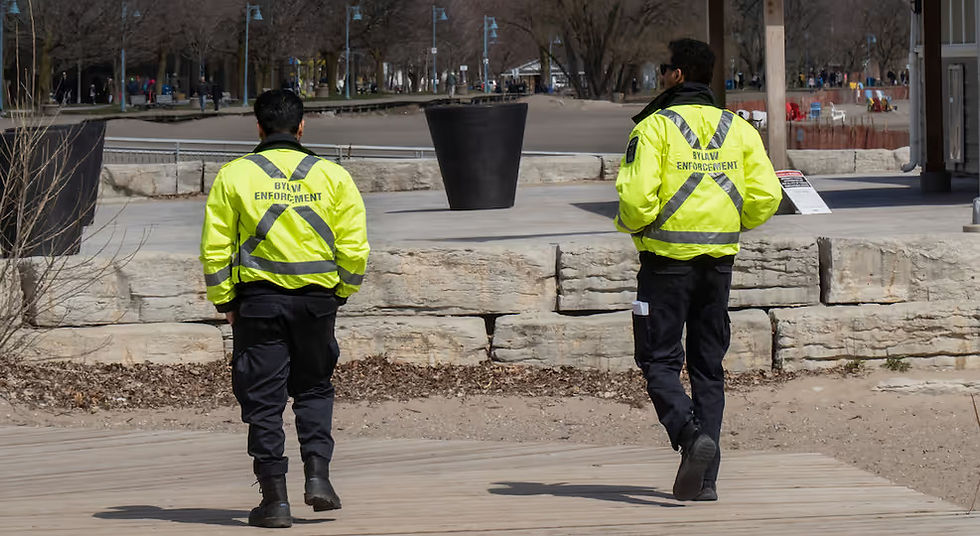
I was happy to support a request to review and strengthen training practices for City enforcement staff. While there is already training in place, regular reviews are a valuable way to ensure the City continues keeping pace with best practices and evolving service expectations.
I know that by-law enforcement can sometimes be a source of frustration for residents, particularly when issues are not resolved as quickly or consistently as expected. Supporting routine reviews like this helps ensure staff have the tools, training, and guidance needed to deliver enforcement services efficiently, accurately, and fairly across the city.
As part of Council’s broader focus on improving enforcement practices, Council also supported a motion to strengthen oversight related to residential construction activity, tree protection, and neighbourhood impacts.
Residents across Toronto have raised concerns about construction practices on some infill housing projects, including damage to neighbouring properties, tree by-law violations, work taking place outside permitted hours, and confusion during the approvals process.
The motion directs staff to report back on the effectiveness of recent tree by-law enforcement enhancements and identify additional opportunities to strengthen the City’s Residential Infill Strategy. This includes improving education for builders, supporting better construction practices, improving complaint management, and strengthening communication with residents throughout the construction process.
As Toronto continues building more housing across our neighbourhoods, it is important that development proceeds responsibly and with clear accountability for everyone involved.

Lastly, this report directly to Council from City Planning provided legal advice related to the proposed development at 2912 to 2926 Sheppard Avenue East, a proposal for a 50-storey mixed-use building containing 590 residential units that the developer has appealed to the Ontario Land Tribunal.
While this development is located outside of my ward, I know its scale and construction impacts will be of significant interest to many nearby residents and communities.
The specific legal strategy discussed by Council remains confidential due to the ongoing Ontario Land Tribunal proceedings. However, I was pleased to see City staff continue advocating for residents’ best interests as negotiations and discussions with the applicant continue ahead of the upcoming hearing. I will be sure to share more details on this legal process as they become available.
NYCC Preview
Next Tuesday, May 26, North York Community Council will meet to consider a number of local planning, traffic, tree, and property standards items affecting our community. Below is a preview of some of the agenda items that may be of interest to residents.
As always, please feel free to reach out to my office if you have questions, concerns, or feedback on any of these matters before the meeting.

Residents may remember this application from my recent development update. The revised proposal from the developer seeks permission to construct four buildings with heights of 47, 42, 42, and 42 storeys, containing a total of 1,814 residential units and a small onsite public park. The proposal would also demolish the existing residential building on the site.
While City Planning staff have continued reviewing the application, the applicant has appealed the applications to the Ontario Land Tribunal. The report recommends that the City Solicitor and appropriate City staff attend the hearing to oppose the applications in their current form while continuing discussions to address outstanding concerns.
This item returns after being deferred last month to allow for additional consultation with nearby residents and stakeholders. Thank you to everyone who has shared feedback so far.
These requests originated from residents in Henry Farm who raised ongoing concerns about speeding and traffic safety in the neighbourhood.
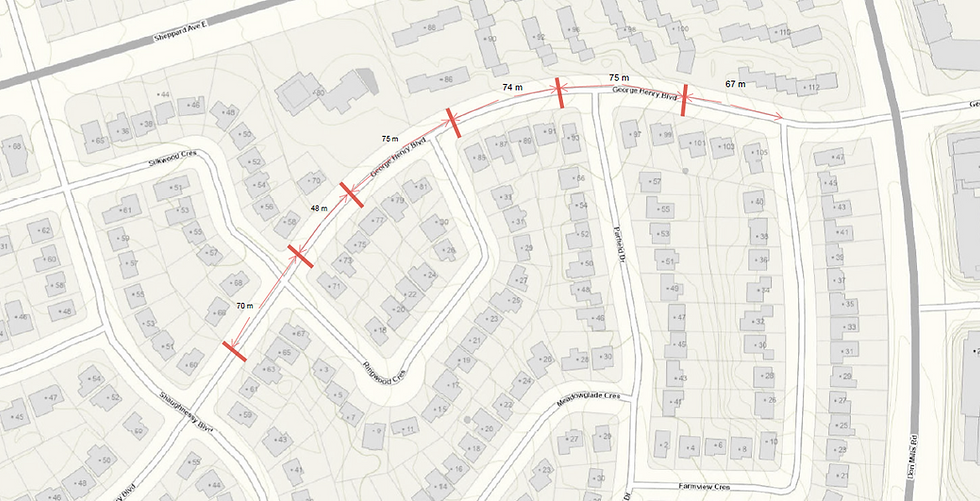
In areas without automated speed enforcement cameras, speed humps remain one of the most effective traffic calming tools encouraged by the Province to reduce speeding and improve safety on residential streets, but these need to be done with communities and tailored to our neighbourhoods so your feedback and support is critical.
I know many residents’ experiences with speed humps come from older installations in other parts of the city that could feel abrupt, noisy, and frustrating for drivers. The designs being installed today are significantly different from the traditional speed bumps many people remember. New speed humps are longer, more gradual in shape, and tapered toward the gutter so they do not interfere with stormwater drainage.
These installations are designed to encourage a steady travel speed of approximately 30 km/h along the roadway. Drivers travelling at appropriate neighbourhood speeds should be able to pass over them comfortably, while higher speeds become noticeably less comfortable. The goal is to create safer and more predictable conditions for everyone using the street, including pedestrians, cyclists, and local residents.
For residents interested in learning more about how traffic calming requests are reviewed and prioritized in our community, including the process for requesting speed humps, I encourage you to read my earlier update here: https://www.shelleycarroll.ca/post/working-together-for-safer-streets
Please continue sending your feedback on any of the above items before Tuesday’s meeting for consideration.

Thank you, as always, to everyone who continues reaching out to my office with feedback, questions, and ideas. Your input plays an important role in shaping the discussions we have at Council and Community Council, and I always appreciate hearing directly from residents about the issues that matter most to you and your neighbourhood.
I hope you and your family have a safe and enjoyable weekend.

