

Budget 2026: Delivering on Safety, Affordability, & Jobs
This morning, I launched the City of Toronto’s 2026 Budget. And to save you from skimming straight to the bottom of this E-Blast just to find the number, here it is—the one I know everyone’s curious about:
The proposed combined property tax increase for 2026 is 2.2%, a 0.7% property tax increase and the 1.5% increase to the City Building levy, which supports critical investments in transit and affordable housing.
Now that we’ve checked that box, let’s take a moment to talk about how we got here, and why that matters.

This is my third budget as Budget Chief for this term of office. Since the beginning, I have made a clear commitment: we would take a disciplined, multi-year approach to repairing the City’s finances after more than a decade of underinvestment. Once we did the hard work of getting our house in order, we would move toward a more stable, long-term approach to property tax increases.
This budget demonstrates that our long-term strategy is working. Over the past two years, we have identified millions of dollars in savings and efficiencies while continuing to improve services. Our financial management has been recognized internationally, with Toronto receiving a credit rating upgrade—the first in more than two decades – saving Torontonians millions more each year.
Over this term of Council, we have been closing the significant financial gap left by the extraordinary costs of serving our city through the COVID-19 pandemic. That meant asking residents to absorb higher-than-usual property tax increases, with combined rates of 7% in 2023 under Mayor John Tory, 9.5% in 2024, and 6.9% in 2025. Those increases were not taken lightly, they were part of a deliberate plan to stabilize City finances while protecting and rebuilding the services people rely on every day.
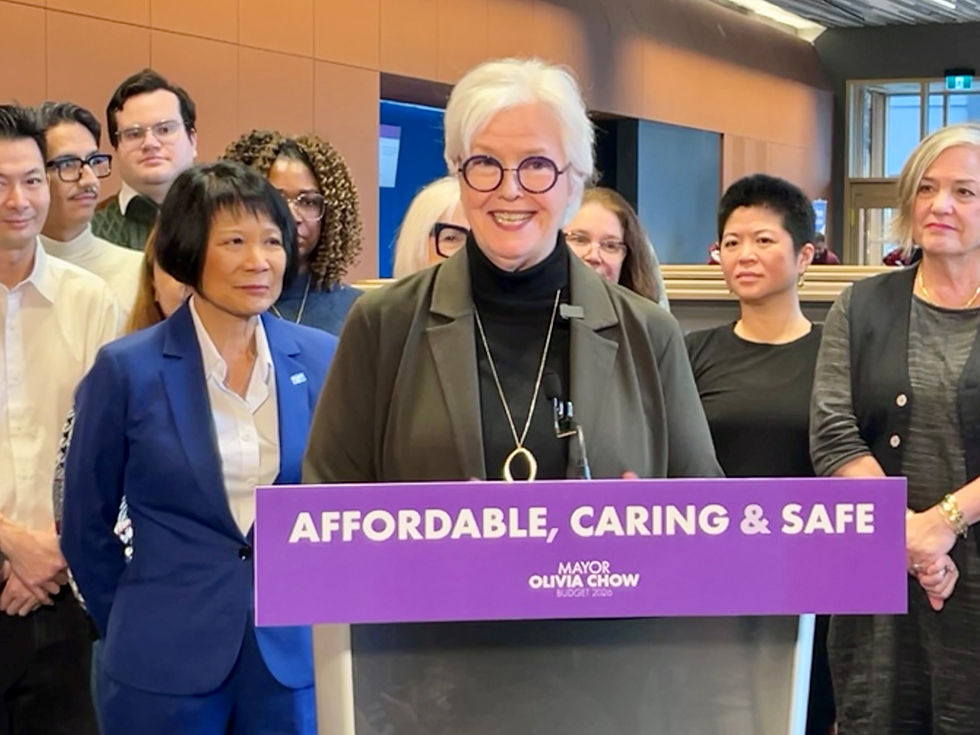
As Budget Chief I promised that these increases would follow an intentional arc, and that once we reached more stable footing, we would bring that arc back down. The proposed property tax increase for 2026 (the lowest in the GTHA) reflects that promise and acknowledges what I’m hearing across Don Valley North: families are managing many costs, and affordability remains a real concern, especially in an uncertain global economic climate.
Getting here was not easy. Early last summer, I worked closely with our Chief Financial Officer to set the most stringent budget targets City divisions have seen in years. We asked for deeper cost controls and efficiencies across the organization. In some cases, divisions submitted as many as nine draft budgets before meeting their targets.
This budget is about being responsible with public dollars while protecting the services people rely on every day. At a time when families and businesses are feeling real cost pressures, the City is focused on managing expenses carefully and investing in the basics that support good jobs and a strong local economy.

Affordability, however, is only one side of the equation. Safety remains a top priority for me, for Council, and for residents across Toronto.
Safety in our neighbourhoods. Safety on our roads, sidewalks, and transit. Safety in our homes.
We are already making real progress. Auto thefts, break and enters, and homicide rates are down. 911 response times have improved, and our non-emergency phone lines are performing better so residents can reach help when they need it.
This budget builds on that progress. It continues our multi-year hiring plans for police, fire, and paramedic services—not only to replace retiring staff, but to add new first responders where the data shows they are needed most. We are also investing further in faster, smarter emergency response, with additional 911 operators and improved call prioritization so help gets to you sooner.

We have adopted a bubble zone to better protect vulnerable institutions and tripled the size of the hate crimes unit. While these steps are making a difference, I know more must be done—especially in the face of alarming rates of antisemitism. This budget strengthens our commitment to safety and ensures we keep building on these priorities for every community across Toronto.
We are also expanding the Toronto Community Crisis Service (TCSS), our fourth emergency response, which provides specialized support for people experiencing mental health crises. TCSS will continue to increase its presence in neighbourhoods and on transit, ensuring the right response reaches the right call.
Over the past two years, your investments have helped make Toronto work better for people in very real, everyday ways. We expanded school food programs to serve more than a quarter-million students, froze TTC fares while improving service across the city, extended Sunday hours at all 100 Toronto Public Library branches, kept outdoor pools open longer during extreme heat, and increased access to local arts, festivals, and cultural events and we expanded supports and programs for seniors.

The 2026 budget is about making sure those services, and many others you rely on, run reliably and efficiently. They need to work, and they need to work well, every day, in every neighbourhood. These investments improve quality of life across Toronto, and they happen because residents speak up, stay engaged, and expect their City to deliver.
Affordability also means helping residents find and create meaningful work. At a time of global instability and economic uncertainty, we cannot afford to leave job creation to chance—especially for young people struggling to enter the workforce. That is why today I announced my intention to expand eligibility for the Small Business Subclass Tax, effectively cutting taxes for small businesses so they can grow, hire, and create more local jobs for Torontonians.
Over the coming weeks, the Budget Committee will review the details of the budget, ask for clarifications where needed, and begin formal public engagement. Here is how you can participate:
January 9, 2026, from 4:00 -6:00 p.m. I will participate in a live call-in show on Newstalk 1010 with Deb Hutton alongside our Chief Financial Officer.
January 14 and 15 I will be co-hosting two telephone town halls with the Mayor, the City Manager and the CFO where residents can hear directly from staff and ask questions directly. You can join those town halls here.
Monday, January 19, 2026, at 7:00 p.m. I will be hosting a virtual Don Valley North Budget Town Hall. I encourage residents to RSVP at shelleycarroll.ca/Budget2026.
January 20 and 21, 2026, the budget committee will be hearing live deputations, in person or by video conference. You can register to speak to the committee here.

These conversations are an important way to ensure residents understand what is in the budget, why certain choices were made, and how to share their feedback.
Under provincial legislation, the Budget Committee will forward the budget to the Mayor at the end of the month. She will review the feedback received and may propose amendments before the final budget comes to Council for a vote.
My hope is that changes will be minimal. The budget we introduced today includes the resources needed to advance our key priorities: safety, affordability, housing, and repairing critical infrastructure. In a time of economic uncertainty—particularly given global pressures beyond our borders—I believe our focus should remain on delivering these core services well and reliably, rather than adding last-minute ideas that drive up costs.

This budget is about being intentional. It is about prioritizing efficiencies, protecting affordability, and making sure the services you rely on are there when you need them. I look forward to hearing from you in the weeks ahead and continuing this important conversation.
As always, thank you for taking the time to stay engaged.


