

The Last E-Blast: Blackout Period, Council Highlights and Community Updates
With the municipal election period beginning on August 1, this will be my last weekly E-Blast you'll receive until after Election Day.
During the election blackout period, Members of Council are prohibited from distributing community newsletters, E-Blasts, flyers (except in emergencies), or organizing and hosting community events such as community meetings, Environment Days, or movie nights from our City Councillor offices.

While our outreach activities are paused, my constituency office remains open and my team will continue to help residents with City services, local issues, and constituent casework throughout the election period. My existing social media accounts will also transition to election accounts, so if you'd like to continue receiving updates from City, please follow me here.
This week also marks the final Council Meeting of the term. In this update I've included highlights from this week's City Council meeting, along with an update on a development my team just received, and an update on the Rain Barrel program.
Thank you for following along over the past four years, and I look forward to staying in touch throughout the election.

Council Highlights
Women's professional sports are truly having a moment. From hockey and basketball to soccer, Toronto has become a leader in supporting women's sports, with growing audiences, sold-out games, and athletes who are inspiring the next generation. If you don't regularly watch sports on streaming services, where many young fans now follow their favourite teams, you may not realize just how quickly women's sports have grown in popularity and profitability.
To support that growth, Council approved a long-term lease that will allow the Toronto Tempo, Toronto's and Canada's first Women's National Basketball Association (WNBA) team, to build a permanent practice facility. The Tempo made history by joining the WNBA this year, and this 40-year partnership with the City will create a state-of-the-art home for the team while delivering lasting benefits for the community through new recreation spaces, public programming, and a new public park.

The approximately 60,000-square-foot, state-of-the-art facility will include two full-sized indoor basketball courts, training and support spaces, and other amenities that will serve both the Toronto Tempo and City recreation programs.
Just as importantly, through a Community Access Agreement, the City will receive a minimum of 2,260 hours of annual access for public recreation programming. That means more registered and drop-in programs, permit opportunities, CampTO programming, and dedicated opportunities for women, girls, and youth to play and develop their skills.
The agreement also includes the design and construction of a new City-owned public park at no capital cost to taxpayers. The park will feature outdoor basketball courts, public washrooms, pathways, seating, landscaping, and other amenities, with the final design shaped through community and Indigenous engagement.
This partnership is an incredible investment in our city and a tremendous opportunity for women, girls, and young people. At a time when positive role models and accessible recreation matter more than ever, this facility will inspire future generations while creating lasting community benefits for Toronto.

A key priority for me is helping people experiencing homelessness move out of parks, ravines, and other unsafe outdoor locations and into appropriate, permanent housing with the supports they need. This report is an important update on Toronto’s actions to address homelessness by expanding and strengthening supportive housing options for residents who need more than a place to live.
City Council has directed staff to advance supportive housing projects by prioritizing City resources, including capital funding programs and City-owned land, while exploring opportunities to convert appropriate shelter sites into permanent supportive housing. The City is also advocating to provincial and federal governments for sustained investments in housing and support services. This approach pairs stable housing with wraparound supports to help people facing complex mental health, health, or addiction challenges build long-term stability.
Have you ever talked about a great online grocery deal with your daughter, only to go home, check the same website, and discover the price isn't what she saw? It happened to me, and it left me wondering why two people could see different prices for the exact same product.
One possible explanation is a practice called surveillance pricing. Companies can use personal information, such as your browsing history, shopping habits, or even the device you're using, to predict what you're willing to pay and show you a different price than someone else for the same item.

We don't yet know how common this practice is in Canada, and it's not clear what legal tools governments have to address it. That's why, following the lead of other governments looking into this issue, Toronto City Council has directed staff to examine every available option to protect consumers and report back in early 2027.
With grocery prices continuing to put pressure on household budgets, I believe we need to explore every tool available to make life more affordable. This review is one part of a broader effort to stand up for consumers and ensure Torontonians are treated fairly when buying everyday essentials.
It also builds on the City's other affordability initiatives, including expanding school food programs, supporting local food security organizations, exploring new partnerships to improve grocery affordability, and advocating to the provincial and federal governments for stronger consumer protections and greater transparency. While municipalities don't control grocery prices, we can use every tool available to make a difference.
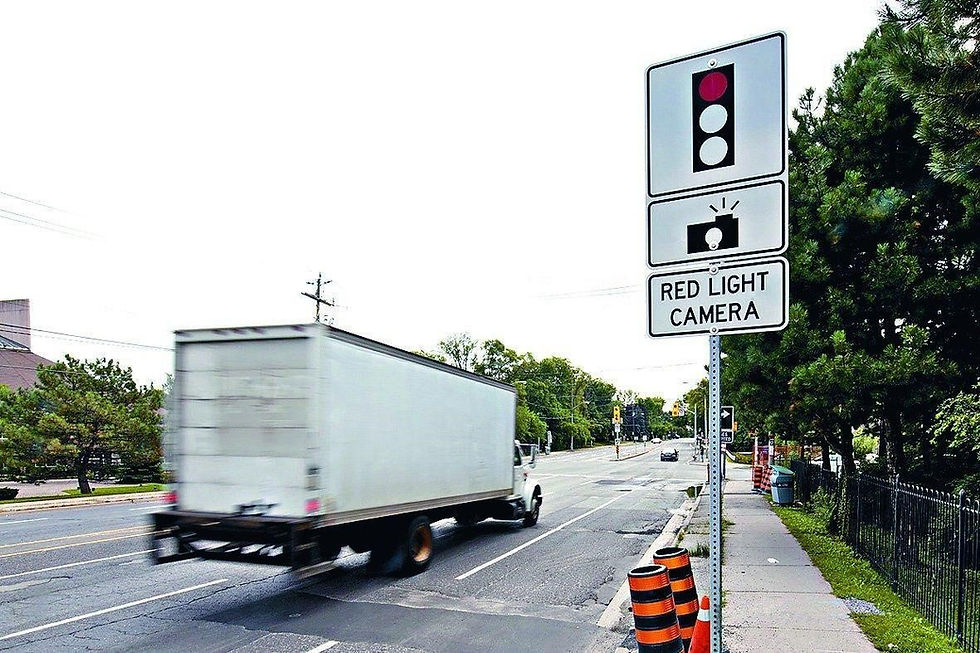
I have always been a strong supporter of the work of Toronto’s Auditor General.
There is sometimes a perception that the City does not do enough to hold itself accountable. That is exactly why the Auditor General’s independent audits are so valuable. When a City system is not delivering the results residents deserve, the Auditor General investigates, identifies improvements, and provides recommendations that can save residents money, time, and frustration.
The Auditor General’s latest review looked at the City’s Administrative Penalty System (APS), which handles disputes and collects payments for administrative penalties, including parking violations, red light camera tickets, and other traffic by-law offences. The APS was created to provide a faster and more efficient alternative to resolving these matters through the provincial court system.
In 2025 alone, the City processed approximately 2.2 million parking and red-light camera penalties. However, the audit found significant delays in the system, including an average wait time of 252 days to screen parking penalty disputes and a backlog of more than 247,000 parking penalty disputes. Red light camera penalties had a shorter, but still significant, average screening time of 48 days. For residents, these delays can create unnecessary frustration and uncertainty. Improving the system means disputes can be reviewed sooner, people can get answers faster, and the City can provide clearer and more timely service.

The audit also identified opportunities to improve how the City collects outstanding penalties and applies existing tools to encourage timely payment. Between 2022 and 2025, the City had $659.5 million in penalties and fees that were collectable, with $215.8 million still outstanding as of December 31, 2025.
The Auditor General made five recommendations to strengthen the Administrative Penalty System, improve oversight, speed up dispute resolution, and ensure the City is doing everything it can to recover money that is owed.
This is exactly why independent oversight matters. The Auditor General helps us identify where systems can work better, and Council and City staff must take action to make those improvements. Residents expect the City to be responsible stewards of their money, and this work helps us deliver on that responsibility.
PH32.7 - Billy Bishop Airport Proposed Expansion: Response to Council Request for Information on Housing and Transportation Impacts & MM43.90 - Stop the Province’s Land Grab, Give Toronto Island and Parkland Back to Toronto - by Mayor Olivia Chow, seconded by Deputy Mayor Ausma Malik

Just one week before Prime Minister Carney announced that the proposed expansion of Billy Bishop Airport would not move forward, I spent the better part of a Sunday talking with residents at our Community Environment Day at Old Cummer GO Station.
I was struck by how many people wanted to talk about the airport. So many couples stopped by to ask where I stood and to tell me they hoped I would oppose the expansion. I had received emails on the issue, but hearing those concerns face-to-face reminded me just how strongly people felt about protecting Toronto's waterfront and public spaces.
I shared that I had led the push to extend the airport's lease the previous year so it could complete the runway improvements needed to meet updated federal safety requirements. That was about maintaining a safe airport. It was never intended to open the door to a major expansion. It was disappointing to see the airport and the Province move ahead with plans that included expropriating City-owned waterfront lands to make that expansion possible.

I'm pleased that the federal government listened to the concerns raised by residents, the City, and communities across Toronto. This decision is a real reminder that when people speak up, governments do listen, and local advocacy can make a difference.
With the expansion no longer proceeding, Council adopted the Mayor's motion calling on the Province to repeal the legislation that expropriated City-owned lands, including Little Norway Park and the entirety of the Toronto Islands, and return them to the City. Bafflingly, the Province has suggested that it will continue forward with its plan so this may not be fully over. I will continue to make sure you have a strong voice in what happens on our waterfront.
If the Province and Federal Government are still looking for major economic development for Toronto’s downtown, there is a desperate need for a massive upgrade and expansion of our Metro Toronto Convention Centre Facilities. The plans are fully market-researched and completely drawn up. The MTCC plans have been presented for Provincial approval and funding for some time. Such a project has the power to put us back on the world map and create a legacy for all three orders of government.
NY34.14 - Don Mills Regeneration Area Study Leslie Site - Final Report & CC43.11 - Status Update Report on Official Plan Amendment 804 - Request for Directions

I want to draw your attention to two reports together because the Don Mills Regeneration Area Study provides an excellent example of the kind of planning approach we are advocating for in the Consumers Road Business Park.
As you may remember, in 2023 the Province introduced the Helping Homebuyers, Protecting Tenants Act (Bill 97). One of the key changes was a narrower definition of “employment areas” — lands specifically protected for jobs and businesses. This change removed some of the protections that had helped preserve the vision for Consumers Road Business Park.
Our goal has been to find a path forward that protects employment opportunities while allowing the area to evolve thoughtfully. That is why the City has requested that the Consumers Road Business Park be redesignated from a General Employment Area to a Regeneration Area. This designation allows for a broader mix of uses, including employment, commercial, institutional, and residential opportunities, while giving the City more tools to guide how future development happens.

I know many residents and businesses in the Consumers area have questions and concerns about what this change could mean. Regeneration Areas are a new concept for many people, so I encourage you to take a look at the Don Mills study to see what is possible when a community, City staff, and local stakeholders work together on a long-term vision.
We are still waiting for the Province to approve our request to redesignate the Consumers Road Business Park. If that approval is granted, there will be a robust community consultation process to help shape the future of this important employment area. Taking a look at the Don Mills example now is a great way to understand the possibilities and be ready to participate in that conversation.

The day before the Council session began, I spent the day with my fellow Board members at Destination Toronto, our city's not-for-profit tourism organization. It was our first opportunity to debrief after FIFA World Cup 2026.
Having a Board made up of leaders from Toronto's tourism and hospitality industry provided valuable perspective. We reviewed the benefits to hotels, restaurants, attractions, and local businesses, analyzed survey results to better understand how business and FIFA-related travel will translate into future visits, and looked at extensive international media coverage that showcased Toronto to audiences around the world.
I also have to share an industry insider's perspective. For more than a year leading up to the tournament, members of Toronto's hospitality industry were regularly speaking with their counterparts in the other host cities. They often heard questions from American colleagues like, "What's going on with your media? Why does everyone seem to be against the World Cup? Aren't there a lot of soccer fans in Toronto?"

Then the tournament began.
Toronto, its residents, and even its media embraced the moment. We became known as one of the most exciting and welcoming host cities. Before long, those same American host cities were asking us, "How did Toronto pull it off?"
The answer is simple: you did.
You welcomed visitors from around the world, embraced the excitement, and showed patience with the security measures, road closures, and changes that helped keep everyone safe. Together, we showed the world what Toronto is all about.
The early findings in the staff report before City Council reflect what it felt like on the ground during the tournament: Toronto successfully delivered on its hosting responsibilities, residents embraced the moment, and visitors experienced our city at its best. The early results are extremely positive, showing the significant benefits this event brought to our tourism and hospitality sectors and the way it elevated Toronto's profile around the world.
Staff are continuing the important work of finalizing the financial reconciliation, including confirming revenues and budget offsets related to FIFA Fan Festival operations. A final report with complete financial information will come back to Council once that work is complete, expected in early 2027.
When we bet on ourselves, there is no stopping Toronto!

I know many residents have been following the progress of the ReNew Sheppard Secondary Plan and have been asking when the vision approved by City Council will take effect.
The Secondary Plan, which was approved by Council, remains under appeal at the Ontario Land Tribunal (OLT) by several property owners. Because of these appeals, the policies and protections in the plan are not yet fully in force.
If the recommendations in this report are approved through the OLT process, much of the ReNew Sheppard Secondary Plan could move ahead while Planning and Legal staff continue working through the remaining site-specific appeals.
While the details of the settlement discussions remain confidential because they involve legal advice, moving this process forward would be an important step in protecting the vision we heard from residents. Throughout the ReNew Sheppard process, residents were clear that growth is coming, but it must be planned carefully, with the right infrastructure, transportation improvements, community services, and a focus on creating complete communities.
Getting these policies into effect will help ensure that future development along Sheppard is guided by the long-term plan approved by Council and informed by the feedback residents provided.

I welcomed City Council’s support for the Inspector General of Policing’s Notice of Issue on the rise in antisemitism and hate-motivated incidents. Last month, I joined the Inspector General of Policing, police leaders, police boards, and Jewish community organizations to help inform this work. The resulting Notice recognizes many of the important steps Toronto Police are already taking. In recent months, through sustained engagement with the Jewish community and the work of the Toronto Police Service Board, Toronto Police has strengthened its response to antisemitism with enhanced coordination, training, victim supports, and oversight, while the Notice encourages police services and boards across Ontario to continue building on these efforts.
As Chair of the Toronto Police Service Board, I have also been meeting regularly with our Jewish Community Advisory Table since it was established four months ago to help shape the Board’s response to rising antisemitism. This fall, the Board will build on that work and the Notice of Issue by considering a new Public Order Policy, developed in partnership with the Advisory Table, to strengthen how Toronto Police protect both public safety and Charter rights during demonstrations.

Congestion remains one of the biggest concerns I hear from residents across Don Valley North. Whether it is getting to work, accessing services, or simply moving around our neighbourhoods, people want to know that the City is doing everything it can to keep Toronto moving.
That is why I was pleased to bring forward this motion with TTC Chair Jamaal Myers to strengthen the role of the City’s Chief Congestion Officer and improve how we plan and coordinate major road and transit closures. When essential construction and maintenance work is needed to repair, improve, and expand our transportation network, we need to make sure we are also planning for how people will get around during that work.
Residents should not have to navigate unnecessary gridlock because different projects were planned in isolation. By improving coordination and making transit a central part of our planning, we can reduce congestion and keep Toronto moving while the important work of building and maintaining our city continues.
Statement on Shootings at Kiva’s Bakery & Jewish Businesses
The attacks targeting two locations of the same Jewish-owned bakery this past weekend, followed by another incident at a Jewish-owned business on Tuesday, have been deeply disturbing. These incidents have shaken Toronto’s Jewish community and underscore the importance of continuing to stand firmly against antisemitism. I have included the statement I released on Sunday below.
The reports of two incidents targeting locations of the same Jewish-owned bakery this morning are profoundly alarming.
Whether through violence or intimidation, repeated incidents like these take a real toll on Toronto’s Jewish community. They erode people’s sense of safety and leave business owners, employees, customers, and families wondering whether they are being singled out simply because they are Jewish.
The Toronto Police Service is investigating both incidents, including through its Hate Crime Unit. Those responsible must be identified, and if these acts were motivated by hate, they must be prosecuted to the fullest extent of the law.
Toronto’s Jewish community deserves to know that its safety is not negotiable.
Development Update:
2450 Sheppard Avenue East
City Planning has recently received a development application for the property at 2450 Sheppard Avenue East, on the property at the northwest corner of Sheppard Avenue East and Victoria Park Avenue, currently home to the Food Basics plaza and Chuck E. Cheese. As soon as I became aware of the application, I asked City Planning to begin briefing my office so that we can understand the proposal and ensure residents are kept informed from the outset.
Application: Phased redevelopment of the site with five mixed-use residential buildings ranging from 10 to 49 storeys, containing a total of 3,635 residential units. The proposal also includes approximately 3,385 square metres of ground-floor retail space, a new public street connecting Sheppard Avenue East and Victoria Park Avenue with sidewalks and dedicated cycling facilities, a new 0.26-hectare public park, enhanced pedestrian connections, 1,388 vehicle parking spaces, and 2,750 bicycle parking spaces.
Community Consultation: To be scheduled.
Status: The application has recently been submitted to the City but has not yet been reviewed to determine whether it is complete. The formal planning review has not yet begun. If the application is deemed complete, City Planning will begin its review and a community consultation meeting will be scheduled.
City Planner: Derrick Wong, Derrick.Wong@toronto.ca
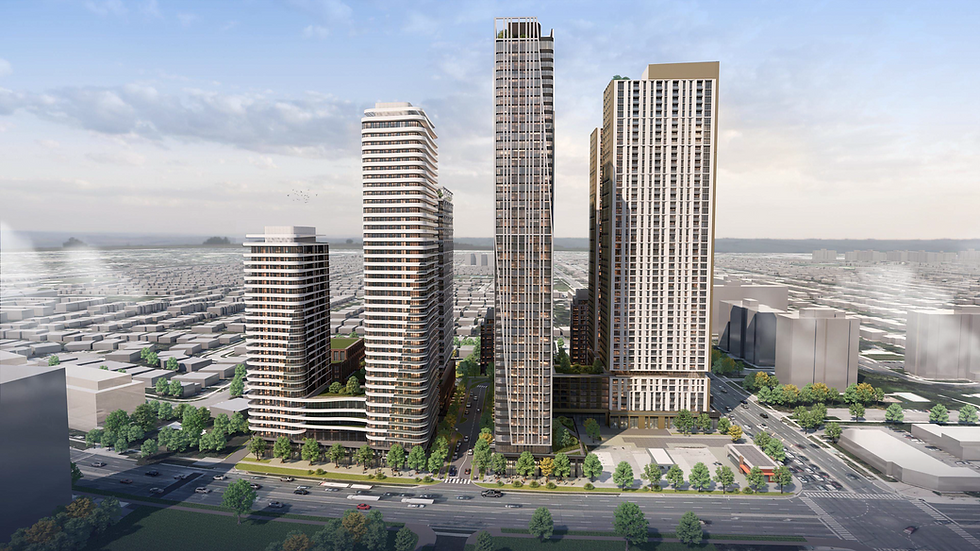
This is a significant proposal, and I know many residents living in the area north of Sheppard Avenue will have questions about what it could mean for the community. I am also concerned about it’s impacts and will be following it closely. For now, the application has not been deemed complete, and there are no immediate next steps until City Planning has completed its initial review.
Unfortunately, over the past several years the Province has changed planning legislation and significantly increased housing density expectations across Toronto. As a result, it has become increasingly common for developers to submit proposals that are much larger than what residents may have expected in the past.
There will be a full public process for this application, including opportunities for residents to review the proposal, ask questions, and provide feedback before any decisions are made. Given that the application has only just been submitted, it is unlikely that any construction would occur for some time.
Throughout this review, I will be pressing City Planning and the applicant to address the issues that matter most to residents, including traffic congestion, transportation capacity, schools, parks, community services, infrastructure, neighbourhood fit, public safety, and the quality of the public realm.
Update on the Rain Barrel Savings Program Sale

I have heard from many residents who were frustrated and disappointed by the rollout of the City’s Rain Barrel Savings Program. Many residents were eager to take advantage of this program as an affordable way to conserve water, collect rainwater for outdoor use, and support environmental sustainability at home.
When sales opened on July 23, the response was far greater than anticipated. The overwhelming demand exceeded the third party vendor’s website capacity, resulting in technical difficulties that prevented many residents from completing their purchase. Since then, City staff and the vendor have worked to improve system performance, increase capacity, and introduce additional measures, including a virtual waiting room, to help manage demand. Unfortunately, interest continued to far exceed the available supply, and many people still could not access the website.
The second round of the program has now sold out, with all 3,000 available rain barrels claimed on a first-come, first-served basis. I know this will be disappointing for many residents who took the time to try to access the program and were unable to secure a rain barrel. My office is working with City staff to better understand what the program could look like next year, including how many rain barrels may be available, and I will share that information as soon as it is available.
City staff are reviewing the challenges experienced during this launch and will be evaluating how the program can be improved in the future, including how demand can be better managed and how residents can have a more reliable experience accessing these types of programs. I also expect the vendor to be held accountable for the failures that occurred during this rollout. Residents should be able to participate in City programs without facing preventable technical issues, and I will be pressing to ensure the lessons from this experience are reflected in any future program delivery.
Thank you to everyone who shared their feedback and for your patience as staff work to learn from this experience and improve future program launches.
As always, if you need assistance with a City service, have a concern in your neighbourhood, or need support navigating a municipal issue, please do not hesitate to contact my office. While the election period changes how we communicate publicly, my team remains here to support residents and ensure you continue to have access to the services and resources you need.


